

Many students aren’t struggling because they’re lazy, unmotivated, or incapable. They’re struggling because something inside their system is blocked: stress, avoidance, fear of failure, disorganization, self-doubt, or simply not fitting into the rigid mold of traditional school.
In this powerful conversation, coach Liz Schnautz shares how she helps teens and young adults move past the internal barriers that shut down learning and steal confidence. Using Blocks To Flow coaching, Liz guides students to understand what’s really going on beneath the surface and shows parents how to support without pressure or power struggles.
Liz’s strength is seeing the learner beneath the behaviors.
She meets students where they are, helps them understand their blocks, and equips them with tools that last long after coaching ends.
Students grow more confident.
Parents feel less alone.
Homes become calmer.
And the student who once felt stuck finally steps into flow.
This episode is for any parent, educator, or teen who knows: there’s so much more inside; it just needs the right connection to come alive.
—
Watch the episode here
Listen to the podcast here
The Hidden Blocks Behind Struggling Learners With Liz Schnautz
How Coach Liz Helps Students Break Stress Patterns, Overcome Avoidance, And Rise Into Their Potential
Coach Liz, welcome. How are you?
I am doing really well. Thank you. I am really happy to be able to talk to you.
Ground Yourself Now: The 3-4-5 Breathing Secret For Focus
Thank you so much. Before we begin our conversation, Liz, we always do an exercise, which is the breathing exercise. As you all know, those of you who are watching and Liz as well, we always have our past brain, thinking about all the past things. Just on a rewind and play all the time. That is happening. Sometimes we are just so worried about the future and fearful, we are over here with our future brain, thinking about all the things that are going to happen. What happens is that we are never here, like here and now, in the presence. Every time I do these conversations, I like to ask our guests to tell us what type of breathing exercise do you do to bring themselves here and now.
One that I have been using lately, and I have also been teaching a couple of students, especially because a lot of the students that I work with go to a really big high school of several thousand students. I tell them during the passing periods between classes to do a quick breathing exercise as they are walking, because they do not need any equipment. They do not need a computer. They just need themselves.
I feel like it helps them quiet the noise while they are transitioning from class to class, whereas like breathe in for three, hold it for four, and let it out for five. It is so simple that I feel I have found a lot of them. They say that really does help them sort of decompress from where they were. Get ready for what is up next. As you were saying, get rid of the past and do not worry about the future yet. I am like, I am right here now. I am moving in space. Cognitively and spiritually, I can just be here now and be on my own.
Can you help us do a couple of those rounds?
Let us see. I suppose you would do it at your own pace, too. You can breathe in for three.
Breathe in for three and then hold for four?
Hold for four, and then we let it out for five.
Let us do it again. Breathe in for three. Hold for four. Breathe out for five. Three, four, five. Goes another kick. One more time. Breathe in for three. Hold for four, and then breathe out for five. A lot of the time, we do not have to focus really hard on the numbers. Sometimes that is not the point. Did I hold for four? That is not the point. Just hold enough so you feel the release. You feel the hold. You feel the inhale. It is all about the feeling for your nervous system to calm down.
It is interesting, I try to do something like this with my students in every session. I will ask them, do they need something that is more grounding or more energising? Most of the time, they choose grounding, and I will participate in it with them. It helps me too. It helps me sort of transition from the craziness of being a parent earlier in the evening to like, “I am here now, I am with a student, and I am going to stay focused with them and to just transition my energy and ground me.” I often thank them because I needed that.
I just did one with you, and I feel great because I feel now and here. It brings me here again. Otherwise, everybody has something to do in the past or something to do in the future. Here is so hard for us because of all the noise around us.
It is so easy to just take a minute. That is all we took.
It is not a long time. No equipment is needed.
Unmasking The ‘Perfect Parent’ Myth: Why We Overreact (Blocks to Flow)
You and yourself and your breath.
Thank you for sharing that. I love it. You are a Blocks to Flow certified and licensed coach. When you think of the phrase Blocks to Flow what comes to your mind?
I am thinking of a moment in my life when I am feeling that block. The first thing that comes to mind is not responding to my kids like I want to when we are in a hurry. It is like a snap. I will say something, or I will yell at them, or I will slam the door, and it feels really good. It is like we are rushing out the door, and I am just caught up in the moment. I feel like I want to handle that better. It is so easy to say that you want to handle it better. In the moment, you get caught up in it. I am thinking like a parent. I really do want to be more responsive and not just react.
Let us look at that because that is not just you. That is, every parent does that. If you do not do it every day, you do it sometimes. We have to. I have done it too. Why do you think we do that?
Our system is just overloaded. It is like we have expectations of how something is going to go, and we are trying to direct the actions of somebody else. It is hard.

Struggling Learners: Our system is just overloaded. We have expectations of how something is going to go, and we’re trying to direct the actions of somebody else. It’s hard.
Underneath it, it is more than that is I need to do it right. As parents, we try to do everything right. If there is a mistake, “Oh no.”
We are doing the best we can.
That is the underlying thing is that I have to get this perfect. Perfect under pressure. The minute the perfect comes along, we are to add pressure to it. Our kids do not need pressure. They do not need to be perfect either.
They just need us to show up.
Calm and present is what they are looking for as well. We have expectations because we came from a system. We were trained by a system of education where performance was everything, and perfect performance was what was given good grades.
A lot of families, too, it is like the expectation, or I think from the kids’ perspective, the expectation is, “I have to be perfect. I cannot mess up.”
Some of you might be thinking, “Don’t we all have to get things right? Can I just do whatever I want?” That is not what we are saying. There are guidelines. We are going to do our best. Saying putting pressure on getting it best and perfect is a different story. That is where it comes along is that pressure makes us so reactive. If we do not get it right, there is going to be something going to happen, and then the fear of something happening, which is in the future now.
We do not need to worry about that yet.
We are not even there. What can we do, Liz, during these types of moments when we are under pressure to perform? What is the simple thing parents can do?
Recognising when we do get heated like that, or we do get frustrated, and you slam the door, and then you get in the car, and you are like, “I am so sorry. I just had a moment. I was being human. I was frustrated.” Just acknowledging that to kids, and letting them see us or hear us be human and know that, like it is okay to mess up and then apologise or do better.
Conversations with our kids about if you feel like you blew it, it would be just, and we say, “I had a moment.” As you said, explaining really helps because they need to know that you are a human, because when we can set false expectations for them in the future, either because we are their role models.
It is like, “I am doing the best that I can. In this moment, this is the best that I can do.” I can also acknowledge that maybe I could have done that differently. That is okay.
That is a conversation that is beautiful than saying, staying quiet, and thinking that they will just forget about it. You know how many parents do that. We are so ashamed that we did it, and we do not want to talk about it. We almost feel like, “If I just do not talk about it, they will not even they would not have even see it.” Do you think they do not see it?
They see it.
Our kids are like full-time photographers. They do not shut their cameras off.
I feel like their memory, too, is like a steel trap. They will remember that one day something happened when they were not your blue sweater at home.
Have you ever seen these little kids? They say some things, and they are like, “Where did you learn that from?” It is almost the same words that we have used. They did not listen to it, though. At the time it was happening, they probably were not doing their own thing, playing somewhere in the other room. They are picking up their antennas are scanning.
I will hear my daughter say things to her younger brother. I am like, “That came out of my mouth.” She is parroting it. It is like she was listening.
Thank you for bringing that up. It is almost important that we have that conversation. These blocks. We block ourselves with perfection. Wanting to be perfect is the block. We overreact to protect that perfect narrative, and then we feel bad as if we’ve done something wrong. We talked about it. The whole thing is unblocking.
That would be just to be human. There is no perfect parenting. I wish I could give you that book, but we do not know. None of us has it. If anybody is selling it out there, they are lying. There is no perfect way to do it because they do not know your child, though. If you think about it, how can I make a perfect book for parenting when I do not know your kids? I have never met them.
Even from one kid to the next. I was having this conversation with my daughter the other day. She is 16, and my son is 12. She says, “How come you do this with him?” I am like, “I learned from parenting you.” He is also a different person. Parenting is a wild ride.
No one book is going to come out in the world. If they say it, it just it is pretty much nonsense because every soul is different. Your son is a different soul than your daughter is a different soul. They are here to express themselves.
We are not afraid to.
We need to give them the space they need. It is like giving each plane its own runway. They need that to express themselves. That is how I look at it. Every child is different. Every journey is different, and that is what parenting is all about, isn’t it?
Yeah.
I love it. Our kids are older now, but I will do it again because with them, we learn so much about ourselves. Don’t we? I am the person I am today because of my kids. I would say I would have been a lesser person if I did not have those kids in my life and my students in my life.
I was going to say I have learned so much from my students, too. I had students long before I had my own children. It is funny that the experience that I had with students sort of informed the way that I parented. Now, the way that I parent informs the way that I work with other people’s kids. It has been an interesting process.
The Readiness Operating System: Why Your Kids Aren’t ‘Ready’ To Fly
With the Blocks to Flow, when you are working with your students, one of the things that Blocks to Flow and the readiness OS system is doing is we expect our students to be ready to learn, or even we expect adults to be ready to go. There is a stage, a state, or a phase between being ready to go. Before that, there is a readiness phase where we get ready to perform and do things. How has this changed the way you look at education?
There is so much like there is so much going on beyond the classroom that teachers realise, but maybe do not have the time to address. That is one of the things I love about the coaching that I am doing now, which is that I can address that stuff with students. As a teacher, I would see the students in the classroom who were not in flow, who were not ready.
I would try my best to help them get there. With a classroom full of kids, it is different. As you said, everybody has their own runway. Having to be the air traffic control for so many different runways is exhausting. Being able to focus on one student at a time is very different. I love that I actually get the chance to interact with them one-on-one and figure out who they are and where they need help getting into flow.
Let us talk about this performance economy we have created. If there is no performance, like somebody signs up with you and then the parents are like, “What do all parents care about? What do we want as parents? What do we want?” We want our kids’ lives to be in flow and performing, and beautifully evolving. That is what we want.
All parents want that. That is what they want. When we introduce a program of readiness, it is not just jumping into performance because we do not even know if the system is ready for performance yet. You were saying earlier, you cannot let a plane take off until it is ready. I am going to fix things in midair. We have got to get it all ready before we take off. That is what we are doing. In that, sometimes people think, “That is a delay.”
It is not because you are preventing things later on during the flight.
This is actually big. I did not even have this ready for our conversation, but it is working really beautifully, a plane analogy. If I do not do the readiness on the ground, just imagine what is going to happen in the midair.
It can be even more catastrophic. It is like the prevention helps everybody involved. Working on the prevention end before you get into the air is really helpful.
What I am downloading right now, what I am thinking is also like, it is like our education system is currently, it is like looking at the plane going, “Why aren’t you taking off? Hello, take off.” It is like talking to a plane that is not ready to take off. It is going to work. It is not going to happen. You can try all you want. It is just going to look stubborn, and that is what we are seeing in behaviours from our students.
All the air traffic controllers are arguing with each other. Is it a plane or I do not know.
Everyone is looking at it as, “Why can’t you fly?” “I am not ready to fly.” Readiness is a thing. That gets them ready.
We have to help them. That is our job.
That is the beautiful thing about the Readiness OS is we look at this as a system. A plane is a system of other subsystems working together to take off and stay, and take, and go to the next destination. Our body is the same way. We are made out of all these systems working together to be the BIM and be who you are. If we do not go to that system level analysis and look at where the blocks are and unblock and bring them up to activation, so that it could be an acceleration. That is what we are doing. It does take time, but when it does, when you do that readiness work, you can fly anywhere.
The idea of all the different systems and the metaphors and things really resonates with a lot of people, and it makes it real and less abstract for a lot of students, especially our young people, because it is something with the metaphors like the traffic light or the battery for their energy. It is like understanding the filing cabinet for the memory system. It helps them understand all of these different parts, but makes it very concrete. It is like, it’s all inside of you, but if you can sort of envision all of these different pieces inside of you, it makes it a little bit easier to figure it out.
The Missing Link: How To Make Learning Resonate With Your Child
For parents who are tuning in, what would you say is the missing link in learning for their kids so that they can understand better?
Think about this from, you can think about it from a couple of different perspectives. For me, I was thinking about it from a teacher perspective first, and thinking about the missing link was creating connections for students through music and stories, and finding different ways to lead, instead of an academic discipline. I was like, “Can I help them connect to what they are learning?”
Maybe it is the same thing for parents, too. It is like connecting the learning of what your student is doing at school to life and helping them find those connections because maybe they do not have the connection yet, or maybe the teacher has not explained it in a way that really resonated with them. My daughter has had different history teachers, and she talks about how this year, her history teacher, in particular, she understands or can engage with the material so much more because he is doing it in a way that resonates with her.
Connect what your student is doing at school to life.
You do not always have control as a student over who that person is at the front of the room. Figuring out ways to engage with the material and finding a way that it resonates with you as a student, as a learner, to really get into it, instead of when you are feeling blocked, it is like the information is not getting in because I cannot find a way to attach it or I cannot find a way to engage with it.
Now that you have your own business as a Wholistic NeuroGrowth Learning Success Coach using the Blocks to Flow method, how are you able to help students? You said that you have really found helping young adults, very unique to yourself. Seeing them flourish in this model is amazing for you. Tell me a little bit about that.
Giving them ideas about how their body is made up of lots of different systems. It is like, I am one person, you are one person, but there are so many different parts to you. We’re telling them about their strengths. Figuring out this is where you are really in flow. This is where, like your system is running and it is healthy and going at full throttle.
These other systems are blocked, and they are impeding the progress of the other systems because they are all interconnected. Being able to talk to them about these are all different parts of you, and helping them figure out how do I become the coordinator of all of these different things and help? That is part of growing up and getting to know yourself.
I feel like a lot of teenagers and young adults are trying to figure out who they are and how they learn and how they show up in the world. Being able to name the different systems and understand what is going on behind the scenes can really help them get into flow. They can see there is this one piece, the executive functioning, or there is the emotional stuff, or maybe the relationship issue.
Relationships, I feel like, are really big at this age. Friendships there is a lot of drama. There are romantic connections. There is a conflict with parents. That has been a very big piece for a lot of the students that I have worked with, which is figuring out the relationship blocks and how that affects all of their other systems.
Also, don’t you think that when we start getting into those areas, we tend to blame ourselves as we are not good enough, or we are not good at it, or we are just not born with those genes, or I am not cut out for this? These kinds of things. When you look at it through the system perspective, it is no longer it is you as a soul. It is because these systems are not in alignment.
These systems are not activated. When we ring that awareness, they quickly dissociate all of those labels from me being me. It is just the system’s fault. Let us fix the system. Any system can be fixed. Fixing an identity is not going to work. That is identity. If I say, “I am dumb,” that is an identity statement. If I say my system is misaligned, that is easy.
There are ways to align it.
I will just have to figure out how to align it. If I say I am an idiot or stupid, those are personal things that I cannot let go of because it seems like I am at fault. Here, no one is at fault. That is the beauty of it. When we switch that and dissociate personal identity from it, it is just a system. It is not an alignment. Let us get that to work. It works beautifully.
It does take slightly longer to see the performance, but when you see it, it is permanent. You have seen it with your students. How quickly we can do it, but also by doing the prerequisite to it and the readiness to it, they do fly on their own in midair. That is really important as well. What do you think was the hardest pattern or belief for you to unlearn to move through this as a coach?
The ‘It’s Not Me, It’s My System’ Mindset Shift
I initially thought of this question about patterns as a teacher, not so much as a coach, because I feel like, as a coach, it has opened up my whole way of thinking and working with students. As a language teacher, it was hard for me really to go from grammar study equals language learning to we need to learn how to communicate.
I do not know why it took me that long, maybe because of my conditioning. As a coach, though, I feel like it is almost making that transition from teacher to coach unblocked, what I was feeling about how to show up for students. I feel like, as a teacher, I was constrained by time and by curriculum and by the sheer number of people in a room with me at once.
As a coach, it is so great because I can work with a kid and figure out what they need and take the time. After all, we work over the course of a couple of months together, take the time to really sort of dig in with them and look at those systems and say, “This is what you are really good at,” or “This is where you are in flow right now. Let us use that to our advantage to help you bring your other systems into flow and be able to really personalise the experience for them.” It has been transformative for me, too.
You finally see the light bulb moments, or the a-ha moments, or I can do this. I am not as dumb as I used to think. Those moments are so important for educators because that is what we go into this profession for, but in the classroom, it is so hard to get.
I feel like some of my students lately, it is not so much that I am dumb, it is the social stuff in the relationship. Nobody likes me. I am annoying. Looking at that piece, too, and the relationships and how that shows up in their learning environment is interesting, especially in high school, because I feel like there are so many emotions and so many relationships and so much happening at once, especially in high school and college.
I feel like it is overwhelming for a lot of students because the social stuff sometimes takes over and hijacks the learning. They are so focused on what happened in the passing period, or they are so focused on the kid that is sitting across the room that they have a crush on, or that they used to have a crush on, and now there is drama, and there is this friend that said something at lunch. A lot is going on.
The social stuff sometimes takes over and hijacks learning.
Identity Hijacked: Why Your Teen Needs A Strong Sense Of Purpose
It is the setup because this readiness in our Blocks to Flow, if we set it up through that, they no longer are in the past or the future. They are just here and now. In here and now, one of the biggest things that is happening to many people is that we do not have a strong purpose. Every student must, every child must have a strong purpose and a value that they hold true to.
Without those, what happens is if my neighbor says something like, “Your nose is ugly,” I will then believe it. You know what I mean? I do not define myself. I have not defined myself yet. I am letting others and other people and social situations define me. I just have to be so unrooted to receive all of those things. I am going to be very disappointed at all of these things because some people do not care what they tell us.
They do it just for fun, like for sport.
I am at an age where I do not know the difference. You and I know that adults who are watching us know the difference that I do not really care how you feel. You can say and walk away, but still feel heard, though. Our kids at this age, you are saying the elementary, middle school, young adults, they have not developed that enough to know that the hurt stuff they are hearing from these people, they cannot say it’s none of my business and walk away. They are going to put all their energy and resources that are available to invest in that negative thing. Now we know it is a spiral downward.
Forget learning because things are going on.
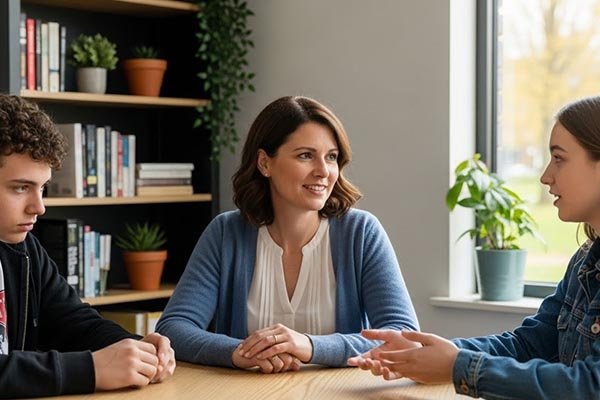
Struggling Learners: Just listening and honoring what they’re going through is key. If they want advice, they can ask for it, but if they just need to get something off their chest, that’s perfectly fine too.
Learning is out of the way. It is on Pluto. Kicked it off. That is why forcing them to do anything at this point is like it is forced and do it. It is not possible. It is actually torture. If you think about it at that stage, if you force learning onto anyone when they are going through this, it is torture. Some people who might be tuning in might think, “This is like gentle parenting.” You are just going to let them off the hook. They are just going to act as if they cannot learn, and they are trapped in their negative emotion. We are just going to let them know. What do you say to them?
We need to recognize what they are going through and sort and honor it. Maybe you can empathize. My daughter thinks that I do not understand what she is going through because I was a teenager 30 years ago. Things are so different now. They are really not. Social media and phones and whatever, but we are still human, and we still have those emotions, and we still have the confusion, and we still have the relationships that we are navigating. I feel like honoring their reality and just showing up for them.
Something that I have tried with her and with some of my clients as well is, “Do you need me to listen or do you want advice? Do you just need to vent, or do you need me to help you solve the problem?” Just listening to them and honoring what they are going through. If they want advice from somebody wise, they can ask for it. If they are not looking for advice, if they just need to get it off their chest, that is okay too.
I also think that acknowledging the difference, like when she says every child says that to their kid. “You do not know what I am going through.”
“You do not understand.”
That is what my son says to everyone says it. That is normal. When they say it, you should talk to them about this and then give them an option, like “What do you want me to do? Listen, I will be the one who listens to you,” or “I will be the person if you want me to give you some perspective on this.” I can give you perspective as well, because advice is not a good word. You are talking to your child. Advice is not a good word. That word shut you out immediately. They hear, “Here is my advice to you.”
It’s an important skill to recognize that you may not always be able to function at the same level or use the same strategy every time, and learning how to adapt and be flexible.
“I do not want your advice.”
Here is a perspective you can think about that lambs better. What they are going through is the same as what we went through as well. A lot of it is because there was gossip, there were mean people, there were ugly people. Who made us feel ugly, too? Ugly meaning not look-wise but in their mannerism-wise.
Joke to other people. Just not people.
Ugly behaviors. Towards others. We were going through that. The biggest thing is that we were able to go home and shut the door, and it never came with us. At least we had a peaceful place at home or somewhere. If we leave the grounds of the school, we can ignore them. It starts the next morning, or afternoon if you go play outside or whatever. Now it does not stop.
It is constant because everybody is talking and everybody is posting videos posting pictures.
Snapchat and all these other ways. It does not stop. It continues on and on. There is no break from it. Can you imagine if you had a bully or if you had a negative talker in your life who is constantly with you?
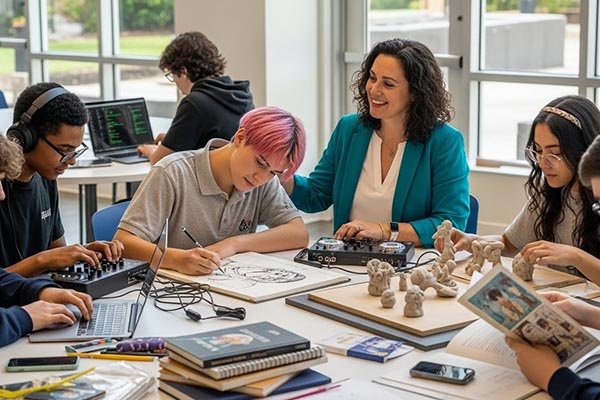
Struggling Learners: If you don’t try it, you’ll never know how successful you could be.
No.
I imagine it because I did have a lot of people who were cruel to me when I was growing up. I cannot imagine.
That is the whole other thing of like self-talk. In school, and like in your head, and you are your own worst critic, like that is a whole other session.
They are going through a lot, so telling them that would be good too. Your life is far harder than what I would explain because of experience, then we can talk about how we can shut some of this off from your life? That really helped me. When I went home, I was 15, 14, and I could shut people out. I might have thought about it, but physically, I do not have to endure these things in my space. Go into conversations like that, but it is a lot of connections.
I Need A Minute: Powerful Communication Tactics For Parenting Teens
I know you have a teenager, so you understand this. Also, even my son, who is currently post-secondary, same, I meet him three times a week. We talk. I do not give him advice. I just give him perspectives because that will be the end of my conversation with him. I ask him for his ideas. What would he do? What do you think? It is so important to ask our kids, too. What are you looking at?
Giving them a chance to think through what is happening instead of saying, “We just got home from school. You have to do X, Y, and Z. Asking them, “We just got home. What do you need to do? What are your responsibilities?” Having them think through it instead of me just saying it to them. There is like, whatever. They are maybe not even listening, but asking them, “What do you have to do?” They have to think through it to be able to actually articulate it.
It also gives them the power to, and then we understand as parents, like, OK, they understand what they need to do. Yes. Hopefully, they are going to go do it. If they left something out or forgot something, then we say, “Do you remember we talked about X, Y, Z also?” It creates that conversation. As you were saying, it is not just that I am giving you advice, or I am telling you what to do. It is having the back and forth of, “Do you remember what you are, what you need to do?”
That is a plan. What you are taking there is that you have a plan with them, and you probably planned it out with them. If after school is getting something is not the right time, just ask them when is the right time. I have always asked my son, like he says, “No teenager ever wants to talk to you.” They always push you out. They are like, “Stop, mom. I do not have time, Mom. I am busy, Mom.” You do not have to talk right now. You just tell me a time.
The grounding part of it and the guidance part of it are what we are going to talk about. That is not off the paper right now. That is not an answer. I am looking for yes or no. I am not looking for yes or no here. We are going to have a conversation, but when is that conversation? You can tell me the good time for you. I have all the time available for you because for us, our kids are everything.
We feel like they are the center. For me, they are very important person. He or she is a very important person. I can say, “I have time for you. You just tell me when you are ready.” A lot of parents tell me my child is old now. They do not like speaking to me. I cannot get them to speak to me. They say that there is no way out anymore. We have gone too far. If any of you are listening like that, you have not gone any further.
You can always take it back with presence and love and connection. You can always bring everything. Also, even like you said earlier, being honest. Say like, “We have not had a real conversation in a long time.” I know things have been very difficult, and often we have had a lot of misunderstandings and we have said so many different things to each other, and it is hurtful. From now on, I want to do something different.”
Kids understand that, and they appreciate it.
Work past the fear because the other side is beautiful.
Switching some of these words. Do it now. Are you going to do it? Why are you not doing it? Shifting those phrases will automatically show them you are trying to change. Show them you are trying to change and see what their response is.
Giving them agency and giving them choices that you approve of, instead of like, “What do you want to do today? Do you want to do this, this, or this?” You have already sort of curated the choices that are all acceptable to you. I like that.
Also, with homework time or chores time, or any time like, “These are the five things we have got to get done today. Let us plan out how we are going to get it done. Tell me what times they are going to happen? Let us get it done. Here you go.”
Like, “Which two are you going to do right away? Which two are you going to do after dinner? Which two are you going to do?”
I do not care about the order. You should not either, but whatever pleases you, we just have to do these because we are an ecosystem of people living together in this household. These are not rules because I command something or I owe you anything like that. It is just that we live together, we function together. These are the things we need to function together.
That is it. A lot of families feel like chores are something they run into a lot of problems with. If you put it as, “We all live together, what is your part in this?” Now we are seeking their responsibility to take accountability for their share. Which is a great thing. There is never a late. People who are feeling like, “I have done too much.” I do not think my family can be fixed. Do you think that is possible?
Little steps. You can fix anything. Just one little tweak might make a huge difference. Give you a few extra minutes in the morning so you are not getting frustrated or doing something in a different order, or all that. Parenting is hard.
Do not respond. If you are feeling really stressed out, do not respond. Even like we talked about, we started. Just take deep breaths, and just find your calm and peace, and start thinking from that, that is one step forward.
We talked about this before, also, like being honest with your kids and letting them know, “I cannot respond right now. I cannot give you an answer to that right now because I am feeling frustrated,” or whatever you are feeling. “You give me, give me an hour and I will let you know,” or “Please wait until tomorrow morning. I will let you know in the morning.” Giving them permission to do that thing, too. I am not the only one who gets the luxury of time to say, “I cannot do that right now,” or “I cannot tell you right now.” Giving them some space, too, I think, is important. Depends on the age and the maturity of the child. It is important to teach them that and let them practice it.

Struggling Learners: Giving them some space is also important, depending on the child’s age and maturity. It’s vital to teach them this concept and allow them to practice it.
Liz, if your younger self could witness who you are, what do you think they would notice first?
My gray hair. I do not see it.
Beyond looks, what will they notice?
Beyond looks, my confidence and just caring less about what other people think. I feel like when I was younger, I was very invested in what my peers thought and what my parents thought, and what my sister thought. It is like that does not matter as much.
How much energy do you spend on that?
A lot of people spend a lot of energy. It is not inner peace. I would not go there, but I just have the confidence. I feel like, as I have gotten older, I have become more and more confident, and maybe partly because I care less about what other people think. I do not know if maybe I care less because I am more confident, or if it is a combination. That is probably what would surprise my younger self the most.
Thinking less about what other things and more about what you are thinking, because that allows you so much space to do so many things. If we think about it, if those of you who are tuning in, think about how many times you have visited? What did they think? What does my mom think? What does my husband think? What does my wife think? What does my brother think? What did the store owner think? Probably gone to a coffee shop and felt like, “What are they thinking?”
Sometimes it is a good idea to take other people’s opinions or considerations into account, but ultimately you have to have that self-confidence to show up as your authentic self and do your best.
It’s a good idea to consider other people’s opinions, but ultimately, you have to have that self-confidence to show up as your authentic self.
One Simple Action To Get Into Flow TODAY
Now, for our audience, many of them are parents, and many of them could be young adults. What is one simple action they could take to get closer to alignment and into flow?
It is different for everybody. To piggyback on what we were just saying, take a minute to quiet the noise that is all around you. Quieting everybody’s opinions and all of the comments that they are making, and listening to yourself. Not look inward, but look inward and just think, “What is it that I want,” or “How is it that I want to be?” Not worrying about things that people are saying online, or the TikTok video that you just watched, or the books that you are reading about, this is how you should be. It is like, I want to be my best self for me and show up for the people in my life authentically.
You can get to a state where you can look at things, but it does not affect your flow. I can go online, and I can stay with a few things. I would not be affected by it because you and I are probably the same. We have developed this through our Blocks to Flow training, and everything we developed in this space, where I know it is distracting me, and I can call it, this is a distraction.
This is an odd fact. This is funny, but like we can just go through it like that and then come back to flow and say, “What is next? What is it that I need to do now?” When we are training that muscle, it is like going to the gym. If it is not trained, it can just take you that way, or that way. Now you are floating around.
Finding a way to quiet the noise and really listen to yourself is key.
You know exactly what you want, what needs to happen. That 100% clarity brings the flow back into your life. Thank you. That is amazing. I love how you said it is not going to work like this for everyone. Breathing does work for everyone because it is connected to all of our systems. That is why.
When one system is off, or another system is off, and we do not know which system is off, breathing always centers back again. That is one thing that anybody can do to find what is coming up for them. At that point, you will look at what is coming up for you. That is going to be different for you, for me, and everyone else. How can you connect with Coach Liz? I am going to have all her information in the show notes.
We are going to have that here so you can connect with her. She is on all social media. She is on LinkedIn. It is a great place to see what she is doing as well. She does offer coaching to young adults, high schoolers, and teenagers. She also, with our Blocks to Flow, we work with not only kids, but with the whole family, because it is holistic. You can reach out to her. Now I just want you to finish the sentence for me, Liz. Flow is?

Struggling Learners: The Blocks to Flow are not just in your brain; they encompass your whole self.
Flow is feeling safe enough to be yourself and let other people in. It is also finding the best way for you to learn about or experience the world. It is like knowing who you are, feeling confident that you can be authentic.
I love what you said. Feeling safe enough to let others in. It goes back to what we just talked about. Being online, you are so safe that you know what information to let in. Getting to that point because safety is everything.
What not to let in.
That means that it is automatic. I know what to let in. I am just going to push, repel everything. The safety in your mind, when you are in that flow, you can bring total safety that repels what we do not want and invites what we want. That is amazing. That is beautiful. Thank you. I love it.
Thank you for having me.