
The school system often puts too much pressure on learners that despite their best efforts, they still struggle to retain actual knowledge. Kohila Sivas sits down with Molly Hurd, a Blocks To Flow coach, who helps young people learn in the best way possible by guiding them in unlocking their flow state. She breaks down her strategies to teach them how to understand the truth about their minds and bodies, enabling them to grow in confidence, improve their self-image, and discover how they learn best. Molly also talks about one of the hardest patterns she has to break: the instinct to immediately take responsibility, fix everything, and carry what was never truly hers. This episode is for anyone who wants to understand teens better, guide them deeper, and support them in becoming who they are meant to be without pressure, shame, and the old patterns running the show.
—
Watch the episode here
Listen to the podcast here
Overwhelm To Flow: A New Way For Humans To Learn And Live With Molly Hurd
Molly Hurd shares how understanding the brain, regulating the body, and shifting old patterns creates real confidence.
Welcome, Coach Molly. How are you doing?
I am well. Thank you so much. It’s a good day.
Our show is called Blocks to Flow. That’s what we’re going to be talking about. I always like to start our session with a breathing exercise. With us being all so busy and we learn to say the busy words so many times during the day, we need to bring ourselves here. I wanted to ask you. What is one of the breathing exercises you love doing to bring yourself here and now?
There are so many, but what I did with my students was an equalizing breath, where you breathe in for 3 and out for 2. It’s one of those that helps stimulate the nervous system, but is very grounding at the same time.
Can we try?
It’s simple. We breathe in for 3 and out for 2. We’ll do one more round.
That’s perfect.
I love breathing exercises.
It’s very important because we’re always spending so much time thinking about our past, or so much time thinking, predicting, and creating stories about our future, except we’re not here. Right here is the only moment we have. It’s so important to be here. Welcome. Thank you for that exercise. When we do these exercises, it brings so much calm and clarity, doesn’t it?
It does. What we need so much is grounding. I call it grounding and being connected. Being connected to ourselves, connected to the earth, and connected to each other, we’ve lost that so much.
Why Learners Are Not Learning At All
Coach Molly, you have been a teacher before. Now, you’re a Blocks to Flow coach. I wanted to take you back to when you were younger. When you were going through the school system, there was something that was missing for us. We know that it’s missing for our students and whoever’s going through. Can you pinpoint what that was for you? What was missing in the system that you grew up in?
Several things were missing, but one big thing for me was not understanding how I learned. Information was put there, and I was expected to know what to do with it and how to process it. Nobody had taught me how to process. It was the same thing I was talking about in my mind and body class about how we deal with emotions. Students were like, “We’re taught to stuff it.” I go, “Exactly.” We’re taught to stuff it, but we aren’t taught how to process it.
To use that analogy of bringing in food, we aren’t taught how to chew our food slowly so that our body can process it. It’s the same thing with learning. We shove stuff, but we’re not taught how to take these bite-sized pieces and integrate them into our lives. I looked at some of my friends who were smart and capable. They seemed to know how to do that, but for the vast majority of us, I don’t think we knew how to do that, nor were we taught how to do that. We were expected to know how to do that.
That is the biggest missing link. We’re a living system. We’re all different. We know that for a fact because we all have different fingerprints. There’s not one to match. That’s what we hear. How is it possible that we can all learn the same way?
We can’t, and we don’t.
What did that do for you as you were growing up? You were receiving all this. You were stuffing it in as much as you could. What does that do for a person? What did it do for you?
I always felt like I was a deer in the headlights. I always felt like I was missing something, and there was this franticness, like, “What am I missing?” What happens is, for me, I thought I was stupid. It was like, “I’m not smart. I’m stupid. I can’t learn. I’m not going to be able to do this. I’m not going to be able to go to college. I’m not going to be able to survive college.” I had a high school counselor tell me that. I can laugh now, but this is a serious problem. I don’t think it’s any different now than it was for me because we’re shoving even more information at these kids.
At that time, we had fewer distractions than now. There were fewer problems. We didn’t face some of the problems that some of our students and parents are facing.
We didn’t have social media. We didn’t have a phone attached to us 24/7.
There was no constant input of good or bad messages. The majority of the time, it’s crap. We have to filter it. I also felt stupid growing up. If I had social media, it would’ve affected me how I am stupid more because the algorithm would’ve picked it up. I would’ve been a majorly stupid person, right?
Yes. That’s what’s scary. I find that my teens’ anxiety levels have crept up. They’re constantly looking for ways to get out of anxiety. With ChatGPT, they’re like, “I don’t have to worry. I don’t have to figure it out because I can use ChatGPT to figure it out for me.” We’re not helping. We’re putting in another Band-Aid. It’s no different than taking a pill for something. We’re not finding the issue. We’re not solving the problem. We’re putting a Band-Aid on it.
This feeling in using ChatGPT, we have to be very mindful because ChatGPT will always agree with what you’re saying a lot of the time. A lot of the time, it’s telling you things that are not true, so you have to ask, “Are you sure about this?” It’ll say, “I’m sorry. I made a mistake.” There are mistakes that are being caught. As young people who are using it, we might take it as if it were the truth.
We don’t know any better. I was listening to a gal talk about ChatGPT. She says, “I use it like my sparring partner.” I was like, “That’s brilliant,” because we need to learn to spar with it instead of going, “Truth.”
Use ChatGPT like a sparring partner instead of treating it as a provider of absolute truths.
Going Beyond The Doom And Gloom Of The World
You have to ask it. Anyone using it to that extent needs to question it, like, “Are you sure about this? Did you check these resources for me? Did you fact-check this for me?” Kids are not like that because they’re so fast with their technology. They want everything immediate. We do have to educate them on that, for sure. That’s a new problem. If anything, it’s a newer problem. Going back to your childhood growing up and saying, “I’m stupid,” and all the other things, how did that stop you? How did that hinder your growth at that time?
It has been a journey. Our lives are such a journey. Each of us is different with our personalities and our learning styles. For me, with things that I grew up with, it perpetuated this issue of like, “I’m not good enough. I’m not worthy.” That is a tough one. That, for me, is still an everyday thing that I have to deal with because we’re trained in that regard.
Our brains like to go down these rabbit holes. I was looking at the headlines, and I was like, “No wonder there’s so much anxiety. If people are looking at these headlines, everything is doom and gloom.” It’s been that way since day one. I was listening to a speaker. He was pointing out headlines from early presidencies. I was like, “Oh my gosh. Things have not changed.”
It’s the same formula.
It has opened my eyes to go, “We have got to get out of that formula. This is not a formula I subscribe to.”
We don’t deserve to live in anxiety and fear.
Unfortunately, social media, the media, and society, we do better with doom and gloom. We like to focus on it.
It gets our attention. If I post something good, that’ll have less attention than if I say, “This is happening. This is going to happen. Guess what’s happening?” That type of fear-involved post will get more attention than if I say, “I’m feeling great. I worked on myself, and I’m great.” I could prove it. It will be less.
People won’t comment on that. They may give it a like, but that’s about it.
Say something controversial or something that’s going to blow their mind, and they’re going to be on it. Everybody will be on it. They want to know more. If you can induce fear and then curiosity to it, there they are. They’re going to want more. They’ll be clicking it. Growing up, you had this fear, and you see that it’s continuing.
Claiming Back And Getting Into Our Flow State
As a Blocks to Flow coach, we know that there’s a prerequisite to learning. Learning is not a button we press and go, “Learn now. Body and brain, learn.” There’s this whole journey to get to that state. Tell me. When you were growing up, what was it that was missing for you in that readiness to learn phase? What was it that you were looking for?
I had a lot of blocks. There were emotional blocks and nervous system blocks. Those were the big ones for me of these blocks because it wasn’t a happy childhood. I have to say that for so many of us, it’s not like we had perfect homes or perfect parents. For me, there was some definite trauma. There were emotional blocks.
I had to learn to stuff my feelings. It was not okay for me to be upset. It was not okay for me to be angry. I lived in a lot of fear. Some of that is my personality in taking that fear. In fear, we either fight, flight, freeze, or fawn. Mine was flight, freeze, and fawn, like, “I did something wrong. I need to make it better. I need to fix it.” It wasn’t that I had done anything wrong.
You were made to believe.
I was made to believe that. It’s like, “This is all my fault.” I’m in this constant flight, freeze, and fawn mode. It took me years to recognize that. All of a sudden, when I look back, the times that I flourished in terms of my learning were times when I realized that I wasn’t in those modes. I was like, “Oh.” A funny example is, a few years before my 50th birthday, I decided I wanted to do a triathlon. I didn’t know how to swim. Here I am, an adult, and I don’t know how to swim. I was like, “I’m going to sign up for a triathlon,” and then I promptly signed up for swim lessons. I was excited because it was like, “I want to do this.”
I overcame those blocks of the flight because this was something that I wanted to do. Thankfully, I have a supportive husband. He was like, “You do whatever you want to do with that.” It was amazing. I learned to swim. I did triathlons. For my 50th, I ended up doing a half Ironman. It was amazing to feel like I had accomplished that, learned that, and done that. I look back on those moments, and there are many of those, where I went, “Yeah,” because I wasn’t in fight or flight mode.
You got into what we call the flow state. You started to flow. That’s not a state you just command. It’s not a button. It’s not a command. It’s not somebody else’s going to bring it on. We have to look at this as a living system. These are subsystems. I’m working with all my subsystems that make my soul express as Kohila, yours as Molly, and anyone reading as who they are.
If we are suppressing it, doubting it, and living in fear, those systems are not in alignment. They’re not activated. We’re suppressing them all. In those moments, we are going to be in one of those states that you talked about. You’re going to be trying to run away from things. You’re going to want to freeze. You are going to want to zone out. You want to listen to your old stories or make up new stories that don’t align with what you want in life.
All the time. One of my favorite books is The Four Agreements. I’m sure you’ve read that one. It talks about being impeccable with your word. It talks about not assuming anything and not taking things personally. That’s one of my biggest things.
How can you not? It’s happening to us.
I am dealing with a couple of emails that I got from parents not happy about certain things. It’s amazing how much my mind wants to chew on those. I have to go, “Molly, stop. Don’t take things personally.I will do my best. Be that flow. Be that water.” When we’re in flow, I think about being that water and flowing around the boulders.
I was laughing because when I thought about that, I thought about how sometimes, people want to throw rocks. It’s like, “They’re going to throw rocks. I’m going to flow around those rocks.” We have to keep moving. This is a skill. It’s a learned skill. This is not something we’re innately born with. We can be born with this, but it’s taken out of us quickly. We have to fight to bring it back.
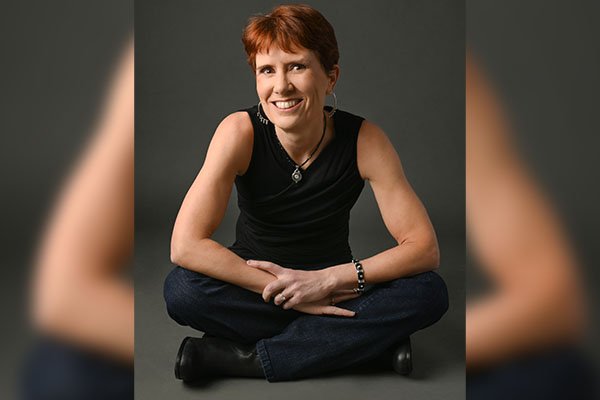
Flow State: We are born with this flow state, but it is taken out of us quickly. We have to fight to get it back.
As you were growing up, getting into this flow, and signing up for these races that you talked about, what was that shift? When did that shift happen for you? Is it a turning point, or is it a slow, gradual belief in yourself and unblocking yourself? What was it?
I have a favorite scripture verse, and it’s from 2 Timothy. It is, “God has not given us a spirit of fear, but of power, love, and a sound mind.” I clung to that verse that I will not have a spirit of fear.
You declared it. That’s beautiful.
I was fearful of swimming in a lake. I watched too many horror movies as a kid and was like, “What if I find a dead body?” I would go, and I would repeat that verse like a drum in my head. Every day, I would swim a little bit longer in the lake. I had to gradually work up to that.
Why Our School Systems Need To Set Up A Readiness OS
That’s important. You were self-coaching yourself. You had this saying that you got onto. You were saying it, and that helped you keep going. In our school system, many parents are struggling. Many students are struggling because we are expected, as we’re coming into the classroom, as ready to accelerate and ready to achieve. It’s like, “Let’s go. Here’s the curriculum. Let’s perform.” We are missing the prerequisite for that, which is readiness.
We call it the Readiness OS. It’s a system that you have to design before entering the school building. You have to have all of this, and then you sit on the desk, and then you’re ready to go as a car would go. You’ve been doing this work with many students. Everybody wants their child to perform, get good grades, you know, write better papers, and get good at math. You know that it’s not possible when this readiness is not implemented. Can you share a little bit of your experience?
Yeah. I still see it. I teach a couple of days a week for homeschool co-ops. I see it where kids come in, and they’re not ready for a variety of reasons. One of the things I see, which kills me, is when I see kids in the morning walking with their sugary drink from Starbucks or any coffee place. The amount of sugar they’re consuming. That does not get your brain ready to learn.
Having their phones constantly, I see it. They’re not supposed to have phones in class, but I see them. I’ll call them out. We’ve lost so much connection. These kids have grown up rooted to their phones and rooted to social media. My husband and I went out for dinner, and I wanted to cry because there was a parent sitting with their child at the restaurant. The parent was looking at their phone, and the child had headphones on and was looking at their screen at the restaurant.
We have lost so much connection with children. They are now growing up rooted to their phones and glued to social media.
I thought about that. I went, “That parent is probably thinking they’re doing something cool. They’re taking their kid out to dinner and spending money.” They’re like, “I spent time with them,” but they weren’t spending any time with them. There was no connectedness. That’s what I feel like we have lost so much. We are so busy. In the area that I live in, there’s a constant bombardment of things that these kids are supposed to do in order to get into college. You’d better not only get into college, but you’d better get a scholarship. One of my high school counselors, her parents expect her to get a perfect SAT score. Not just a good SAT score, but a perfect SAT score. That makes my heart break.
A pressure to perform without readiness
All we’ve taught these kids is to get up, achieve, and do it like little robots.
No wonder that after they get into college and university, many students struggle heavily. During their adulthood, as young adults, they struggle heavily because they have not developed the soul expression yet. They didn’t know how to get themselves ready yet. They were forced to perform. They’re stuck. A lot of people we see are stuck. I was stuck as an adult, too, because I didn’t get any of that. As a Wholistic NeuroGrowth Success Coach and a Blocks to Flow Coach yourself, how do you see it helping others, and how did it help you?
Let me start with how it helped me, because if we can’t help ourselves, then we can’t help others. We practice what we preach. If I am going to teach somebody how to run, for example, then I had better be a runner. For the Blocks to Flow, for me, it was recognizing, “My nervous system was blocked growing up. My emotional system was blocked growing up.”
In a sense, I have fixed things, but recognizing what I fixed was this big a-ha moment. There was this big release for me, going, “That’s it. I understand why I stuffed. I understand why I had an eating disorder. I understand now those things.” I had been able to monitor and go, “I’m better,” but there’s this realization of the why and the understanding.
Why is that important, that understanding? What did that do for your inner work?
It released it. I don’t think it’s any different than solving a math problem. We could go through it, and we could solve, like, “I know I’m supposed to come up with this answer, so I do,” but we don’t necessarily understand it. The understanding, the how to, why it comes out this way, and why it’s supposed to work this way. It’s the same in the Blocks to Glow. When we understand why we have these blocks, then we can release them. There was this weight shift.
When we understand our blocks and release them, we can experience a huge weight shift in life.
Launching A New Class Called Mind And Body
Any stories that come from it, which, at this point, are from the past, we can go, “I know you.”
It’s like, “I recognize that.” As I was sharing earlier about a couple of these emails that I got, it was like, “What are these stories that are coming in?” This is the recognition. Instead of going down the rabbit hole, like, “I’ve screwed up. I’m worthless. I should quit. I should run away,” it’s like, “Let’s rethink this process.” What’s amazing for me is to go, “I’m 60-plus years old, retooling my brain and talking to my brain.” That’s what’s so fascinating. It’s so fun to share.
I’ve shared with you before that I’m designing a new class this year called Mind and Body: The Science of You. It incorporates anatomy, physiology, nutrition, and also the mental wellness tools that we have with Blocks to Flow, like breathing techniques and talking to our brain. I’m being vulnerable with my kids and sharing some of these things that happened to me growing up. I’m going, “These are why I’m sharing these tools with you. This is why we breathe. This is why we talk to our brain.” It’s amazing. In my classes, I feel that connectedness with them, but it stems from me having to be vulnerable and share with them.
They have to see, “Here’s an older person than me who’s going through life like this.” That’s why, after we become adults, we’re searching for the next personal development or the thing that we need so that it can fix us again. As we go through the school system, because we’re not given this readiness, we then go into acceleration mode right away. We have all of these things that are in those very important years of our lives. We pack it and stuff everything. It gets us all blocked. We exit the school system into the real world, and then the real world teaches us real things. With being blocked, you face the real world, and you’re going to be taught what they expect. There’s no mercy out there.
There is zero.
You’re in the open world. There’s nothing. You learn it, and it hits you the hard way. Some of us shut down. That’s depression. Some of us get through the day, get through the week, or get through the month. Somebody presents something, like, ‘This is the next thing you need to know in personal development. It’s going to fix you,’ and we run to that. We’re full of tactics and hacks, but nothing is holistically personalized for us and the personal problems that we’ve been stuck with.
I call it kitchen gadgets. You can have all the kitchen gadgets you want in the world, but if you don’t get in the kitchen, start to cook, and know how to turn on the burner, not any amount of kitchen gadgets is going to help you. That’s brilliant right there. I’m like, “I like that analogy.”
You also need to know the recipe before you start cooking. You also need to know how to do the rest of the recipe to put together a meal. The gadget is nothing.
We are taught that we need all these shiny objects.
It hits you perfectly. Subconsciously, you’re dying, and then another personal development guru comes along and says, “This is it. We found it. It’s going to solve all your problems.” You’re like, “I better get that, too, because I need to solve all my problems,” but then it’s not customized and not holistic. It’s fragmented. It’s segmented. It’s not going to solve this system being suppressed. Originally, I suppressed it. I need to figure out what I suppressed and which subsystems are not working for me. No one’s going to do that. That’s why, going from school system to interpersonal development, we keep going in these cycles and spirals. It’s like yo-yo diets. It’s a similar philosophy. It keeps us in a loop.
Letting Learners Determine The First Steps Of Learning
As a Blocks to Flow coach, understanding that was very important. When I understand my systems properly, and I understand where it stems from, I’m able to flow. When I’m in flow, I can achieve anything. You’re seeing that in the students. Every parent wants their kids to perform. I do, too. Everybody that. What else do we want? Starting with performance places direct pressure on our kids. What do you have to tell those parents who are starting with performance? Where should they start?
Back to our kitchen analogy, they need to start with, “Let me help you read the cookbook,” not, “Here are all the tools. Go do it.” It’s like, “Let’s pick one out together.” I did a little video because I hear this a lot with parents with their students and their teens. It’s like, “Why haven’t you done this yet? What’s wrong with you? Why are you procrastinating? You haven’t done this assignment yet. What is wrong with you? What is going on?”
We have these teen brains that are redeveloping. They’re in that pupa stage, I call it. It’s between the caterpillar and the butterfly, where it melts down. This is what a teen brain is. They don’t know how to regulate. They don’t know how to focus. They don’t know how to do these things. We’re yelling at them to go, “What is your problem?” instead of going, “What do you think the first step would be? Let me sit down with you. Let’s talk this out. Show me. What do you think the first step is? Let me help you read the recipe book.”
It’s the pure connection with them to be validated that they’re going through this because it is chaotic. We went through it, too. In my teenage years, I was a mess.
I was a constant deer in the headlights.
I was like, “How can I run away from this?” Every time something came along, I was like, “How can I escape? What are the possible doors here?” That was my figuring-out stage. I was like, “Where are the doors? Throw me the exit doors.”
I’m seeing these younger parents where they’ve grown up with phones, too, so they don’t know either. This is honestly one of the biggest reasons when I found Blocks to Flow and the Learning Success codes, it was like, “Oh my gosh.” I wanted to reach through my computer and go, “This is it. This is what we need. This is what I need, not only for myself, but to be able to help others.” I love science. I am a science teacher. I love it, but if they’re not ready to learn, it doesn’t matter how many bells and whistles I can stand on my head. I can do all these things, but they’re not going to take it in.
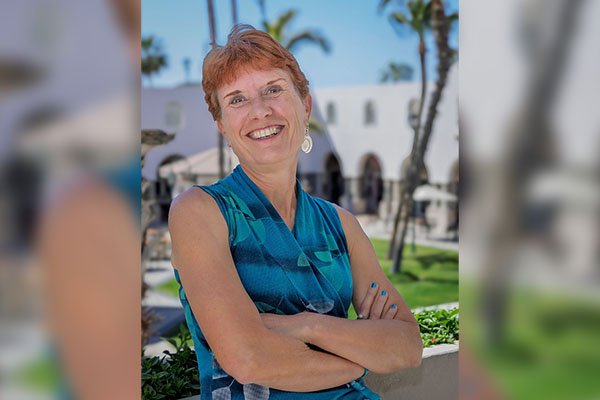
Flow State: I love teaching science. But if the students are not ready to learn, they will not take all of this knowledge at all.
They might, by force or by stuffing it, as we did. Where the stuffing goes, no worries.
It goes in and out. How many times did you and I cram for an exam? We hoped it would stick in there for at least an hour until we could go take the test, and it was gone.
I stuffed it enough that I sometimes tell my brain, “Do not even move because if you move, something might fall out.”
That’s how we made it through. We did it. That’s a survival technique. It’s not a thrive technique. There is a big difference between survival and thriving.
At that state, if somebody would’ve looked at me, recognized that I’m doing this, and shown me, “Here’s how you can learn. Here’s why you’re learning. Here’s what you need to do to get into the state of learning,” all of that would’ve been so much more helpful than going into me thinking I’m an idiot, stupid, and all of that stuff. It would’ve helped me more than completely quitting on myself during those times. For you, it’s the same thing, going into an eating disorder.
We are all going through something. Those of you who are reading, if you’re going through something like this, it’s not that you’re stupid or you’re not capable. It’s just that no one has slowed it enough to notice how you learn and how you get into the state of learning. There is this readiness phase that we all have to implement. If we could put that into the school system, I can guarantee you every behavior out there would go out the door. Behavior is a language of dysregulated bodies.
That breaks my heart. I have this little boy in my Grade 1-2 Physics Zip Zap Zoom Class. His dad was concerned. I could see right away that he’s got ADHD, but I don’t care what he is diagnosed with. This little boy needs a calming technique. When he comes in, I look at him, and I almost breathe, not on him, but connect. It’s this moment of connecting and grounding with him.
This little boy, you can tell he came from public school. The dad was telling me that the teacher always gave him a list of everything he had done wrong that day. We were doing magnets, and the little boy did something. He waited for his turn and shared. I looked at him and said, “I want you to know I’m so proud of you for doing what you did.” He looked at me, and his eyes got big, and he had the biggest smile on his face. You could tell with this little boy, it’s usually like, “Stop this. Don’t do this. Quit doing that. Sit down. Focus.” Here is this class where he can move. I look for opportunities to go, “That was such a great thing you did.”
That’s beautiful. You know what he needs. When we know what he needs and what we need to provide, he’s going to respond beautifully back to us.
He’s responding beautifully. I see Dad after class often, and we chit-chat for a minute. He is like, “This is his favorite class.” It’s the whole embodiment of how there’s movement. He can move. He’s not told to sit in his seat constantly. There are times I go, “Buddy, I need you to sit. Can you sit right here for me?” but I’m not yelling at him or barking at him.
Everybody needs a little bit of redirecting. We’re part of a group, so there’s a group norm. When he’s in that state already, where he’s being connected to you as a teacher at the front, he’s going to respond well to those little expectations. You need to set up in order to ground him. He needs grounding and guidance. All of our kids need that.
The Negative Impact Of Gentle Parenting
That’s what happened with gentle parenting. We are giving so much attention, but none of it is grounded attention. None of it is pure guidance. We’re panicking as we’re doing things. We’re preparing an environment that is not sustainable to prepare for our kids. Our kids need to adapt to the environment. We cannot continuously create an environment that fits them. Our job as parents is to help them adapt to an environment as they enter that environment. That’s what gentle parenting has a problem with. We’re not allowing our children to learn how to adapt to an environment.
I read an article on that topic. There’s anxiety. We are always going to have things that happen. We have to learn how to deal with that anxiety as well. This article is talking about gentle parenting, where it’s like, “Let me take this anxiety away from you. This assignment is too hard. Let me email the teacher and get you out of it.” I’m like, “Okay.” I’ve seen that and had that happen. I had a student, and three-quarters of the way through the year, her mom said, “This is not the class. We’re not going to deal with it.”
We can’t go from one end, where being hit and punished was the only way to parent, to the other pendulum swings all the way to the other end. We’re at, “Let me take care of everything that’s going to happen in your life. Let me protect you. Also, let me prepare the environment so that you never have to face anything that is not suitable.” You are out in the open in the real world. You can’t create environments continuously. You’re going to be tired as a parent creating an environment for your kids like that.
I have to admit. I’m guilty of some of that. Due to the way that I grew up, I wanted to be able to not have to have my kids have some of these things that I went through. I recognize, looking back, that I probably swung a little too much the other way. Thankfully, I have a wonderful spouse. We are a good balance. I can see it’s easy to go the other direction, and it’s like, “Let’s find that middle ground.” Granted, we’re always doing this.
The most important thing, even with gentle parenting, is that we’re not blaming anybody. We care so much, and we need to care so much. This world has changed a lot. I can see why the parent has this anxiety to make sure every environment is good, which is good. That’s what I’d do if I had a little young person, because I know there’s a lot of danger that we can’t even see anymore. It’s hidden. Everything is so hidden.
The thing is, our ultimate job as parents is to make sure we’re grounded in good energy, and then we’re guiding our child with that energy so they feel calmness, not chaos. If I’m parenting from chaos or any fear, I’m automatically inducing that to them. Energy transfers. We cannot do that. First, calm here, and then lead. I’m grounded. I’m leading, guiding, and introducing different environments.
I’m showing them how they are capable of being part of that environment and how their capacity can grow into that new environment. It’s not, “You don’t have the capacity. Let me protect you. How can I protect you? How can I do this for you?” It is, “How can you grow into that environment? Environments are going to change. Eventually, I’m not going to be here.” As a parent, we are going to leave them alone. It’s destined that I’m going to die before my child if we have a good life. I’m older, so that’s a fact, unless we figure out how to live forever. That’s a different story. We need to prepare them for independence like that.
Looking Beyond A Person’s Labels And Diagnosis
I also want to touch on something you said about ADHD. We don’t look through the labels. In Blocks to Flow, we don’t care about the label. We want to look through the soul of the child or the person. When we say that, some people get mad. They’re like, “What do you mean? I have autism. I’ve been dealing with this. I’ve been living with this. How can you say I don’t have it?” We are not saying you don’t have it. That’s not what we said, to be very clear. I know you didn’t say that either. What we’re saying is that we don’t look through that.
Behind the autism label, there’s a person. I want to get to know the person, not the label.
It’s good to understand the label, but if we’re constantly looking through the label, I can’t see the person, and I can’t know how to help them. If I look through the label, all I’m going to try and do is fix this spot here. I want to see the whole person.
If we are constantly looking through a person’s label, we cannot see the whole person that well.
Even with every person with autism, you are different behind the label. No person is the same. If you have ADHD, behind that label, you are different. We know because we worked with thousands of people to know that it’s never the same. That’s why we say we don’t look through those labels. The labels are important when it comes to strategies and hacks, but that needs to be an acceleration, not in the readiness stage.
How Curiosity Can Eliminate The Feeling Of Not Enough
Don’t look through those labels. That’s what we mean. If you’re reading and thinking, “What do you mean you don’t look through the labels?” Labels are great, but they do not show me who you are. It’s very important to know the difference. I want to ask you. What was the hardest thing or pattern to break hardest when you were moving through and moving into flow?
I still think I’m breaking patterns. I honestly think one of the hardest ones to break is that pattern of immediately going, “I’m not good enough.”
It was so embedded.
I remember when I was waiting tables. You can have umpteen amazing good tables, and then have one bad table. That’s what I focus on. What we’re taught to focus on is that one bad table. It’s like having a splinter. It’s like when you have one little splinter. You focus on that splinter and forget the other 99% of your body. That, to me, is a tough cycle to break, and to not look at that one little thing and say, “My body’s ruined.”
Now, you have ways to kick that out.
I do, and it’s amazing. It’s like, “Let’s reframe this. How can we look at this differently? Let’s talk to our brain. Let’s do some breathing.” What’s nice for me is to have these tools because I can better practice what I preach.
It’s also so much more fun to work with myself because I laugh. I’m like, “There we are. You haven’t been here for a while. You’ve come back again.”
What’s cool for me is to realize it takes less time. It used to take me a month. Now, I can recognize this pattern in a day.
You’re going to get it in a snap.
That is what’s amazing. I have something to share. This was amazing for me, too. I had been on antidepressants for a very long time. I’d get off, and I’d get back on. I thought, “This is something I’m going to need.” Going through the Blocks to Flow, when it came to understanding, releasing, and recognizing these patterns, there was a shift enough that I went, “I don’t need these anymore.”
I can’t say that it will work for everybody, but for me, I’ve been off them for a couple of years. That, to me, is true healing, where we get down to the root. It’s that true healing of being able to give ourselves these tools, give kids these tools, and give parents these tools. I was talking with a parent. She said, “I’m ready to lose it.” I was like, “What questions can you ask? Can you come from that curiosity instead of going, ‘Why did you do this?’ What questions can you ask and come at it from curiosity?” She was like, “I never thought about that.”
You could give more details with the curiosity mode than with the other mode you were going to launch because that’s a shutdown.
That’s where I go, “We need to help this not shut down.” There’s a vicious cycle of a good thing happening, and then sabotage. You and I recognize that pattern. It’s like, “This is what’s going on,” and she’s like, “Oh.” I know her son.
It’s a conversation. That shift alone is going to be profound for her. All she needs is to remain in that curiosity. She’s calmer because curiosity isn’t like, “Ugh.” Curiosity is like, “I wonder.”
She registered for our Parenting In Flow. I love having these tools that I get to the root. We talk about preparing the soil. This is preparing the soil.
Molly’s Message To Her Younger Self
If your younger self could witness you now, what do you think they’d notice first?
I had this moment of my little girl inside, jumping up and down and going, “I knew you could do it.” That almost brought a few tears to my eyes there, thinking about that.
If little Molly witnessed you now, what would she notice first?
Notice that I am connected. Notice that I’m not in flight, fear, and freeze mode. Notice that I’m not stuck.
Connect To Your Breathing And With Nature
She’ll enjoy your flow and feel the calmness. Even knowing you then and now, the Molly that I see is taking another stage in her life. It’s different. She’s calm and everything. For our readers, if they could take one simple action to step closer to alignment and feel the flow, what can they do? What is one simple thing they can do?
One simple thing is to connect to your breathing. I would love people to sit, breathe for a minute, and calm the chatter in their brains. Our brains are busy. I still tell people, “Go outside and walk barefoot for a minute in your yard, if you’re capable of doing that.” Not everybody has a place where they can do that. I tell people, “At least go outside and look up at the clouds.” Do you remember when we were little kids, and we’d look up at the clouds?
Absolutely.
We’re grounding ourselves and connecting with nature.
When we’re sitting, sometimes our feet are not touching the ground. Even completely putting pressure on it and touching all points of it gives us a sense of connectedness to whatever it is. If you do it outside, it’s beautiful. If it’s soil, it’s even better. Sometimes, I like to sit in a meditating pose. I was sitting like that right now and changed my position. The minute I put it down, I get this sense of grounding.
This is a practice I don’t always remember, but I try to remember the first thing when I get out of bed is to plant my feet on the floor, feel the floor, and go, “It’s going to be a great day.”
Get In Touch With Molly
The next question is, how can people connect with you? You can connect with her. She has a website. She’s all over all the socials. You can connect with her on LinkedIn. She’s on LinkedIn, Facebook, and Instagram. She’s everywhere. She does host camps in the summer. If you have kids, I would strongly recommend it. I even want to go to her camps.
I would love you to come. I’ve got some ideas for the summer. We need to chat about that.
We will also be hosting once a month online Parenting In Flow workshops. We call them labs. This is free for anybody who’s tuning in. Come and join us. We’re going to show you how to reconnect with yourself, so you can remain as that calm, grounded parent for those whom you lead. That’s what it’s all about. It always happens on the third Wednesday of the month. Our first one is starting already. If you want any information about that, I’m everywhere. Molly is also everywhere on the socials. Connect with us. Finish this sentence for me. The sentence is, flow is?
Flow is the ability to move and create despite the obstacles.
Flow is the ability to move and create despite the many obstacles in life.
That’s beautiful.
When I think of flow, I have this vision that I’m this little ball of light in the water, and I flow with the water. There are times that maybe I get stuck in a whirlpool, but I know I’m going to flow out. I’m going to go around the boulders. I’m safe and connected. When I think of that, I feel in flow because I feel unstoppable.
You brought a beautiful message from the flow. Flow doesn’t mean obstacles don’t exist or come. They’re going to be there, but you know how to flow. That was beautiful. Thank you.
You need to go around.
Sometimes, you might swirl.
You might, but you’re going to get out.
You’ll have the tools. You’ll have what you need to get you out of that. Thank you so much.
Thank you for having me. It’s always such a joy to be able to connect with you and chat with you, so thank you. Thank you for your mission.
Our mission is to serve 1.5 billion humans. I want this Readiness OS system that we created to be in the hands of every single human in the world. If they have it, learning is easy, living is amazing, and leading yourself for others feels natural.
It does.
Thank you.