
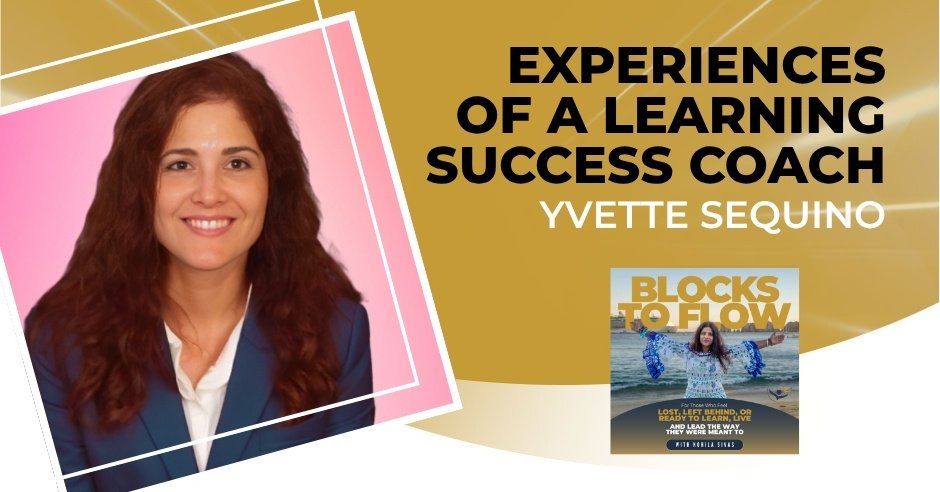
Traditional school systems are not providing the prerequisites to learning, making teaching strategies extremely limited and stressful. Yvette Sequino, a Wholistic NeuroGrowth Learning Success Coach, is actively transforming classroom dynamics right now. Kohila Sivas chats with the founder of Pink and Blue Place about what it takes to make children’s learning more open, giving, and loving. Yvette breaks down different wholistic approaches to level up the current curriculum, empowering young ones to take ownership of their own growth. She also discusses how it makes the experience more fulfilling for parents and teachers, allowing them to set healthy boundaries and offer valuable support to every learner.
—
Watch the episode here
Listen to the podcast here
Experiences Of A Learning Success Coach With Yvette Sequino
Experiencing Heavy Stress As A Teacher
Welcome. How are you, Coach Yvette?
I’m good. How are you doing?
Very good. I’m so excited to chat with you because you left school. How long ago did you teach?
It’s almost just a year.
It’s a year.
What really made you want to be a teacher in the first place?
It was a decision I wrestled with because I had a background in marketing and public relations, and I absolutely loved doing that work. I had young children, and I was a single mom, and when I realized how much they needed, I decided that teaching would probably be the best profession as a mother. I had no idea the number of hours. I think most teachers go in idealistically and then realize, “There’s no such thing as a 35 or 45-hour work week. This is 50, 60, 70 hours a week.’
I made the same mistake, too. I said, “Let’s become teachers so I can be close and be on the same schedule.” Unfortunately, being on the same schedule also makes you not be a good mom to your kids because you’re never there.
If you’re not in the same exact school, the hours and the timing may be very different, and then you have to alter, and even the holidays can be affected sometimes, the days off.
If they have a school trip, then you have to take a day off because it’s happening during school hours. The mom and the working as a teacher thing collide very badly against what we think, as moms. That was your initial entrance into the classes when you became a mom, and you’re like, “This is going to make me.”
This is very fitting right now, but in one of the districts where I worked, we had locked down the first year. I don’t even think it was the first six months on the job.
Scary.
Yes.
How long were you a teacher in the system?
I was in the system for about 15 or 16 years. I had left once or twice. I did have a health concern at one point I left. Other times, I left and I went back into marketing or advertising and did that a little. I kept feeling that pull to go back. Every August, I just come. If you don’t go back, you still feel that pull. I think teachers who have left will always feel that “The school year is starting.”
Why did you have that hard serve in the school system? What was the pull?
I saw so much need. I feel like I was very fortunate as a parent. It wasn’t always easy, and they didn’t always want to do the schoolwork, go to school. That changed with time. It became the thing we discussed, as mom has a job and you have a job. Your job is to be a student and learn, and that’s how you earn. My job is to go to school and earn money. When I was getting my graduate degree, they would come to the library with me and see it.
I saw the difference as a parent in encouraging school. I worked a lot in Title I. I saw a lot of students that school was a safe place, a kind place. Not that all of my students dealt with negatives at home, but school was a benefit for them. They needed a teacher who was consistent and taught them more than just the curriculum. I loved what I was able to do. I always brought in social-emotional learning.
I brought in things that worked for me as a parent teaching my children, like how to write a letter and how to connect with each other, and how to write a communication journal back and forth. Even if the students wrote to me and I wrote back to them, it was still communication. I just felt like that need was so important. I love teaching writing. I just love seeing children write. Even if they don’t like to, there’s a way you can teach them to write.
What happened just at the end of your time in the school system? What were you feeling?
A great deal of stress. I felt my immune system was going on down instead of up. At one point, I had had so much exposure to viruses that my body wasn’t. It took a month to heal, and I caught pneumonia, and my mom and sibling had some illnesses, and the strain and the pull to be a daughter, to be a sister, and not be able to go and help, it was just not acceptable to me. I wanted flexibility.
I remember one of my first bosses saying to me, “The students here need you more than your students at home.” That really stuck with me. First week on the job, one of my sons had a virus or a hundred-something fever, and I had to take him to the doctor and leave early one day or go in late. I don’t remember what it was. That was a concern. Family was a concern. I never had a job where I was told that my family couldn’t come first. Yes, the students are our family. It’s our job when we’re there. However, there’s always a need to also take care of your own family.
Yeah, but it’s also a hierarchy of needs. If you are a teacher who’s worried about your family, you’re not going to perform over here because that’s a biological need, it’s like a need that you need to satisfy. “I need to make sure my house is safe and healthy for me to serve others fully. I’m torn apart, and I’m going to get sick.” Probably what happened to you because of this.
Moms cannot be sick. We have to take care of the household. We have to take care of ourselves so that we can take care of others.
The stress, you said, really came from what? In the classroom, where was the stress coming from, apart from not being able to be a mom? What else?
I would say we look at the system as being “Show up and do your job.” Here’s the curriculum presented and directed in a certain direction. Every district is different. Every principal is different. You do have to align with what you’re being asked to do, and at the same time, there’s more being asked of you, and every year, there’s more being asked of you. Just the other day, I was talking to teachers in elementary to middle school, and I cannot believe the workload that they are dealing with.
It just kept building, and the expectations were building, but the needs of the children weren’t changing. The social-emotional needs weren’t changing. If they needed you during a break instead of going to music or art, or PE, which is a really great emotional outlet for them, and benefits the heart and mind. If they couldn’t even do that and needed you or were angry about something, you couldn’t even do that anymore because you had to be in a training or you had to be in a meeting or you had to be doing something different in 45 minutes and squeezing even if you had to use the facilities, you just couldn’t even get a glass of water sometimes.
The workload of teachers keeps on building, but the needs of children are not changing at all.
My lunches were usually with students because I needed to spend time with some of those children who needed a break from everyone else and the noise. I felt such a pull in all different directions, and it was affecting me. I knew that personally, there were things that were happening that I needed to be in a situation where I could create more freedom. I also wanted to be able to help in a way that I could do and knew that I could do it. Learning from you with the learning success, I knew that this was a benefit, and I love learning. I wanted to do that as a benefit to others.
Becoming A Wholistic Neuro-Growth Learning Success Coach
What inspired you to become a Wholistic Neuro-Growth Learning Success Coach at that point?
I discussed it as a balance. I actually made a graphic of myself holding the heart and the mind because it is a balance, and we get to do that. If we have to stop in the middle of teaching because the student needs to talk about something, we can do that. If they need to take a walk because they’re antsy or get on the floor and do exercises or stretching or breathing, or whatever, they can do that. If they want to play some music or sing a song, we can do that. We can take a break and come back to it.
If you do that in the school systems, in the public school system, someone walks in and sees you allowing that to happen, you’re going to be questioned on it sometimes depending on your admin, more likely now because there’s so much accountability that you took five minutes from that teaching and you didn’t cover the whole aspect of that lesson because you are working on an emotional situation with that student. Call the office and we’ll do it. It’s not going to be the same. That student needs the teacher who they’re closest to to help them with that.
In school, we’re not providing the prerequisite to learning, right?
Yeah. I’m really in the middle with all of that. They do the follow-through, the consistency, the emergencies, the fires that have to be put out, which affect the consistency. We may get the tools, and every district, every school is different, every admin is different. You might get the tools. They may deliver the tools. They may say, “Here, you’ve got the opportunity to do all these things.” We realize once we’re in it, you don’t. You don’t have the freedom to do the things you need to in the moment sometimes. Teachable moments are not always allowed anymore.
Also, the readiness of that child’s learning capacity. When I come to a school, I’m not always as I look back at myself being a student. I wasn’t always ready when I entered that classroom because I had a lot of things going on. Personally, my body, my systems that run me was out of control sometimes. I had thoughts that were telling me how stupid I am 24/7, which my brain kept telling me. With those things running me, just entering a classroom and being expected that I’m just ready to go, felt like nobody cared about me.
I heard something the other day, I think it was a quote from Mr. Rogers, and he said, “As adults, parents, teachers, we have to remember we were children too. We have to remember what that felt like.” It made me think. First, right back to Legos in my living room, I had a neighbor come one day, and I always let my sons play.
If they built a Lego city, it stayed there until they were ready to take it down. I dusted or vacuumed around it. It didn’t matter. We had a dog sometimes and knocked it down, but they felt that accomplishment. We forget that we were there, we were children. We had chances to play, we had chances to go outside and play or to draw or to sit in a corner and read a book, not get thrown on technology. I’m not against technology.
I know the benefits of it. I have a son who’s a programmer and a gamer and creates from it. However, I know that play is important. Self-fulfillment for children is important. Being heard is important for them. We have to remember they have different needs and cannot express them all the time what they need. It doesn’t matter what their ages are. Sometimes in the early twenties, we forget we were there too.
How Children Can Absorb New Materials Better
What do you think you’re currently working on as a coach? What is important for learning to happen? It doesn’t matter in school or out of school. What do we need? What is the requirement for learning to stick and happen?
I believe their minds have to be clear to absorb the new materials that have to be presented to them. If we don’t know them well personally, they’re not going to necessarily open up to us or allow us to see what might be happening or what their thoughts are. Even if they’re a student who may focus on one topic that they love, we have to teach them that that’s fine. You can focus on that topic.
You’ve got to give me 20 minutes, 30 minutes to go into this lesson and understand it, learn about it, absorb it, tell me about it, teach me back what you just learned, and then help strengthen their brain so that 20 minutes becomes 30 minutes, becomes 40 minutes. Once we can do that, we can see that we have structured a little plan and a system in place, and we are actually helping them build their brain and strengthen their learning. I think we need to remember that they don’t know how to ask for it.
How Parents Can Help Improve Children’s Learning
What’s one alignment you think parents need to make when it comes to learning?
I think families now are giving more choices to make learning what they want to learn. In the state where I live, it’s become a different approach. It’s being spoken about right now about charter schools, private schools, and parents having more control. I don’t think parents realize how much power they do have, no matter whether their child goes to public school or whether they go to private school, or whether they’re being homeschooled.
You do have the power to decide what direction that goes. Sometimes children don’t want to do something, and we give in, but the consistency of continuing to do it and putting the impact and the importance on learning is really beneficial. It doesn’t matter whether they decide to go to college or not go to college, but talking about learning as an important factor in their growth is really important.
They have to see us also learning. If we shut down and we’re not learning as adults, we’re not opening a book once in a while. We’re not showing them that it’s important. I think consistency, collaborating as a family, are important. Having that conversation over a meal, finding out what’s happening to that child, asking each person maybe the 2 or 3 things that were great in a day, and the 2 or 3 things that weren’t.
Children have to see their parents learning. If the adults do not even open a book once, they are not showing them how important it is to read.
Do you see that within the work you’re doing, that families, parents are doing that, or do you see a lack?
I’m seeing some changes. I do see recommendations, implemented sometimes, not right away. Sometimes it takes time. Sometimes it might be a little longer. I do see some changes being implemented. I feel like they need to be heard, too. Even in a perfect situation where a student is learning really well, there can always be a little bit of change. A child might seem, “They’re a great student. They don’t need any help at all.” We find out. Actually, they’re not feeling so good inside. Don’t we see ourselves as gifted students or very high achievers?
Some things come out, may not come out in high school, but then they might show up in college, or they might start showing up in middle and high school. That even high achievers have a lot of stressors or angst, and to accomplish, and maybe there’s something in there that needs a little bit of help being discussed to help them through a block that might be there, or a mindset that may need a little adjusting to help them feel more secure as a person.
Achieving Freedom As A Learning Success Coach
Now, as a Wholistic NeuroGrowth Learning Success Coach, how has your approach changed, and how much freedom do you have?
I have freedoms. I think we wouldn’t be learning success coaches if we weren’t somewhat of an achiever. We are achievers. We are learning. We want to continue that lifelong learning. I think we each have our own aspects of the good and the gobbledygook we bring with us, and we are learning every day.
As we’re teaching, we’re also expanding and learning in our own worlds. The term being busy used to be something I thought was, “I’m busy, I’m doing well.” Sometimes you have to stop and see what is making you busy. Is it a healthy benefit or is it not? We have the freedom to decide that. We have the freedom to choose the clients, the families that we can work with. Our hearts go in the direction to the students.
However, we also have to, for ourselves, make sure that we’re taking care of the person who’s doing the work, too. Maybe balancing it all, boundaries, and consistency on our own end as well. I love having a busy desk, and sometimes I’ve got to get those papers and those Post-it notes and get them. I have a busy desk, and that’s got to be organized. I have the freedom to do that. I don’t have to throw it in a box and get to it later.
How has it changed in your personal life, being a coach and having the freedom to navigate as you need it in your personal life, but also for your students to navigate their learning?
It has changed things a great deal. I think not only do you learn more about yourself, but you also learn your family’s limits, you learn what your students’ limits and needs are, and you learn what their families’ limits and needs are. I think each family is different, and no matter what, there’s a need for the student to learn, even if you’re just coaching them to a little bit of a higher level. I had a student last year, the mother wanted the daughter to just grow fast in reading. Sometimes we have to do the work and then explain there’s a maturity level or there’s a pace that it has to go at. I think that it’s a good learning process for us as well. It helps us when the more we work with a family, the more we work with a student, we learn more of what we can do to help.
The more teachers work with families and students, the more they can do to help.
Setting Structure, Consistency, And Healthy Boundaries
For parents who are listening to us, it’s not easy being a parent at this time because there’s just so much going on, so much available, so much new information that is accessible for everybody. It’s so available to everybody. You cannot always be suspicious and controlling of every kid. Doing parenting with fear is the worst thing to do. What would you tell them? How do we relax as we parent in this unknown place?
I get all sides of it. If I’m working with a teenager, sometimes I’ll hear even my younger cousins or my own sons probably feel this way too. Sometimes they don’t want to hear that the parent is the boss. The parent is the boss in this situation. The parents also want to keep the relationship strong, but they also need to have structure in their home controls.
When the students aren’t, maybe following through on one aspect or one assignment or even making their best. We just have to be able to make that follow-through happen, no matter how tired we are, no matter how much we have on our plate. I think parents don’t realize that they may be more aware of realizing it, but they’re the advocate for their child, and they’re also the number one disciplinarian, and that child’s first person that was in that child’s life. You have a great deal of influence that you can deliver to your child and not feel that fear of making that influence happen.
In a positive way, not necessarily parenting with firm boundaries. That’s okay. I think boundaries today are looked at differently than they were, maybe when we were younger. We had more boundaries. You didn’t just go on the TV, turn the TV on, and ignore something that had to be done. Today’s students can grab their phone, and they can ignore it. There has to be that same set of boundaries to help them grow because structure and consistency, and boundaries, and that is a form of advocating for your child.
I always say it’s also showing love when you set the boundaries, I mean, your child feels, “I have this space to explore. Anything beyond that, I have somebody who cares about me, who will look out for me, which is my parents.” It’s really, I find boundaries are, if you think about it in a bad way, if boundaries are put for control, and if you’re neglecting your child, or if you have some issue yourself and you’re putting boundaries that are not healthy, that’s different. Healthy boundaries are important. As you said, that’s the grounding we all need. We feel like nobody cares about us.
It is a form of love. Sometimes, too, it’s the most important form of love. We’re not always in a unit anymore like our families used to be when the last 50, 60 years we’ve been moving away from family units. The grandparents may not be readily there to everyone, or an aunt and uncle may not be right there. You don’t have that extra influence, maybe to affect your children a little bit. In some cases, they do, and in some cases, families don’t. That’s why setting that consistency in family procedures and structure is important too.
Learning Success Coach: Setting healthy boundaries is one of the most important forms of love.
Letting Go Of Perfectionism As Parents
Yes. You specialize in reading, and you specialize very heavily in kids with learning differences. You have done so much work with them. When it comes to parents struggling with that, like you get to know your child’s not learning at the speed of another child or something is going on, let’s look at this, let’s go to a professional, let’s see what’s going on. Parents usually feel defeated. They feel defeated at the end of all of this. How do we help them? This is happening more and more.
I feel so much empathy for parents in this situation. Even if it’s just as simple as a speech deficit or a speech difficulty, or a hearing difficulty, or a vision difficulty. It’s like, here’s a diagnosis and here’s a band-aid. Medication or glasses, that’s just a support. It’s the band-aid. I don’t feel like they’re given a plan. Not having that plan and someone to support that plan, they’re doing their best.
They’re fumbling through it. Some may be incredibly great at getting it situated and advocating for their children. Others might be, “I don’t know what to do. Every day is a different battle. Every day is a new situation. I thought this was the only problem, and now there’s another problem.” I feel like the parents need us desperately for that. There are enough parents out there, and maybe some don’t even want to admit to it because it is a personal feeling to them that they may have done something that caused it, or maybe they have guilt, or maybe they feel like they’re not perfect.
None of us is. We’re learning every day, and we’re working through whatever is on our plate to work through that day. I think it’s moving past that idealistic feeling of, “I’m going to be the perfect parent and understanding that you may need some help to get through this, and that’s okay. It’s okay to ask for help and have the support. We all need support. I really feel for the parents who are afraid to ask for that help because that’s what we’re here for.
We could understand why that’s happening for them as well, because, as you said, this is perfect. I’ve been talking about this word perfect. You brought it up. That comes from our school system, too. What are we celebrated for?
Numbers, data.
That celebration is only good if it’s close to a hundred. Which is perfect.
I get it. I used to fall into that trap too, because I can still quote numbers. I had years where I might have had some very challenging students and see a massive difference in them by showing consistency and love and caring and boundaries and the curriculum and pushing and pushing and then allowing them to have some fun.
I had one principal who I just adored because she would allow me to take it at the end of the lesson, do it like a little thematic STEM project that connected with the end of it. My students thrive. I saw data changes, and I was like, “Look at what this was.” Now that I’m a step away from it, the reason it worked was because it was a holistic learning approach with love, with structure, with some self-governing and some independence, and some neuroscience in there. I didn’t even realize at the time that I was doing it.
There is no way you can get results without it. Those are the ingredients and accountability. Every child wants to be good.
They want to feel good about themselves, too. The ones who don’t get the grades feel really bad, and sometimes it’s not about the grade. It’s about the learning and the learning growth and their feelings inside, so that they feel confident to keep moving forward.
Preparing Children To Face The Real World
A lot of our coaches who are still in the classroom and using this program, they always tell me, like this year, they told me how they have changed the way that they would start the school year. They were like, “I had to really give myself permission, even though I have to do this and this already.’ I put that aside and then said, “I’m going to really make a connection with those people that I have in front of me today. For this week, that’s all I’m going to do.” Those coaches are telling me that they already see the kids are ready to learn. They’re regulated to be learning.
Their life started in April, and they started learning it and then got back into it. I had a couple of gobbledygook things happen, family health and stuff, but then I got back into learning it consistently. When I brought it into the classroom with me, yeah, absolutely. I saw a big change. Even if I just termed it motivation Monday, train your brain Tuesday, wake up with dance Wednesday, I had a couple of different things, and I would change it up because they needed to. They sometimes just needed like to step away from the curriculum too, and always start the lesson with it.
Beautiful. I love it. I think that if we’re going to change the system, we feel like those changes would be amazing. I curriculum is important, of course, because obviously we need the knowledge, but just focusing on curriculum when the system’s not ready to receive it, we’re just pushing children through, and they’re just going to show behaviors when they’re not. That’s what we’re dealing with.
Sometimes, having even a singing bowl on your desk or a little bell that has a beautiful chime sound, the sound of music, emulates the brain a little bit. It could be used for behavior management to get their attention, but then it can also be used for more holistic and self-love, and sit down and breathe, and the techniques that we have that we can use with your program. I love it.
Knowing that I’m ready, or like if we could teach her, it doesn’t matter what age they are, if we could give them a self-check, am I ready to learn? Can I tell that I’m not ready to learn? Can I voice that I’m not ready to learn? This is what’s happening. Can I say it? That’s self-check. If we could start teaching that part of the curriculum, it would be great, and then we would stop the behavior.
Right now, the majority of teachers and principals, I mean, that’s what they tell me, is that “We’re dealing with behavior after behavior, and one behavior leads to another bigger behavior.” It’s like a spiral. How do we stop that? That’s the main thing that needs to happen at the school level is the behaviors that some of these teachers are not trained to even deal with. They’re brand new. Some of them are very extreme and brand new, and parents don’t know either. A lot of it, we don’t know how to deal with it.
There’s a combination of different things. Parents can sometimes say, “My child doesn’t do that.” I used to keep an open door depending on families and my admin, but I would always say, “Come on in. I still do it. If you want to come in and watch, some things are surfacing, and you’re more than welcome to come in and see.” I’ll tell them that you’re coming. Just come on in. I just think that there’s a lot of automatic, maybe a signal in the brain that’ll get defensive and say, “This doesn’t happen, or this is their fault, or this is, it could be the system’s fault. However, we have to look at the whole picture and what’s actually happening in that moment. Every moment’s different. Every situation is different, and the behaviors are changing.
Also, parents, I think, have a hard time knowing that the environment changes, too. At home, it could be okay, but then when we come to the classroom, many other things are happening. That’s why some parents say, “If there’s another child or someone else who is behaving really poorly or their system’s not regulated, so they’re having a difficult time.” Some parents say like “This is not something my child has to deal with.”
That’s another aspect.
Let’s take them out. I think that we also need to help our kids regulate within that environment, because if they go back, go into the real world, no one’s going to protect them like that. The real world is going to happen. Anything can happen. Dangerous things can happen. We need to help our kids regulate within that environment.
When you do go into the real world, you sometimes have the opportunity. Sometimes you don’t have opportunities to get training that will help you how to deal with the challenging behavior of a coworker, or how to deal with the challenging behaviors in a meeting. I got fortunate. I was able to take training like that early on as a beginning manager and a beginning marketing person. I had bosses who believed in it, and I loved it. Not everyone’s going to have that opportunity if we don’t teach it now.
Sometimes, removing students from a situation isn’t always teaching them how to get through that situation. You have to know that we’re not going to give up on them. My students always heard me say that, and I still say, “I’m not going to give up on you. I’m not going to believe in you. I’m always going to be someone you can count on. In this day, at this time, I’m going to be the person right now that you can count on to get through this difficult subject or a lesson you don’t want to learn. That’s what I’m here for.”
Removing students from a situation is not always a good way to help them get through it.
That’s the way it’s so important for our kids as parents. I think the ultimate responsibility of a parent, you and I are parents, and parents who are listening, is to help them regulate their system as much as possible. Know what’s going to trigger them and help them deal with those triggers in different environments, across different environments and different people, so that when they’re by themselves, they know how to really navigate that, right?
Yeah, they will tell us. Sometimes things will come up in the middle of a time frame you wouldn’t expect them, but there may be a topic or a bad memory that comes up, and you have to stop everything and talk through that and find out where that’s coming from all of a sudden. What triggered that in this moment? Let’s talk through that. Let’s see what could have happened differently. How could you have acted differently? What could you have done? I think it helps them a great deal to have that conversation with whatever adult is with them at the time. Hopefully, it’s something that we get to help them with, too.
One Year Later As A Learning Success Coach
You’ve been doing this for one year now, you’re in your own business?
Yeah.
How has your ability to serve your students and families? How does that feel for you now that you have the freedom to do it?
I have good and bad days. It’s a learning process. There have been some situations that I may have misunderstood myself. There have been times I have to be, which is uncomfortable, but more direct about a boundary I need or a boundary that the student needs to learn, situations where the learning environment has to be more attuned to what that child needs in the learning environment.
It’s been a process, and being a business owner, it’s a process. I feel like I’m still learning. I’m not done. I just feel like there’s so much more. I’m just feeling lately someone said, “I have a friend who likes numbers, and this year at 2025, is the nines.” It’s a year of nine. If you put 2025 together and you add all the numbers, it’s a nine. Nine is a year of growth and change, and transformations.
I was hearing that, and I was saying, “It’s funny that we had a conversation, and I was also listening. She was discussing with someone else how it feels like everyone in my life is going through a transformation, and things are transforming so much. We were talking about technology, with personal feelings about schooling, the directions that governments and schooling and subjects, and things are changing. There’s a lot of change happening right now.
I think, for school-wise and learning-wise, and what’s happening, I’m for all the changes because it’s not working right now.
It depends because I used to think this was not a great thing, but now I look back on it. I always try to look at the good and the bad in some situations. I worked in districts where principals would stay in their positions forever. I worked in districts where the principals could change every couple of years or every year. Things evolve or don’t. I’ve had great situations and I’ve had not-so-great situations. I really think that there has to be some balance here. There’s got to be some direction it’s going, so it’s going to work better.
Our children need to be safe in school. Our teachers need to be safe in schools. We need to be able to go to church or the movies, and restaurants, and be safe. There’s no room for any of that. I know it is idealistic. We don’t live in utopia, but we have too much hate. We have too much unbalance. We need positivity. We need people like us to get out there and start saying more positive things.
We do not live in utopia. There are too much hate and imbalance. We need people to start saying more positive things.
After anything that goes, this is to come back.
The three negatives, and then there’s going to be more positives.
I’m excited for what’s ahead, and we have so many people out there working for the purpose of bringing it back. We’re always children who need to be protected, no matter what. That’s the ultimate problem for society.
It’s like when you talk about being in flow and flow state, I had a book on my shelf, and it’s a book about being in flow state. I took that back out, and I said, “I read this ten years ago.” I’m bringing this book back out, and I’m rereading it because flow isn’t just about being in the moment and flowing through something. It’s about flowing in life and things flowing together and gelling and collaborations and things evolving, but evolving where it’s positive and beneficial. Let’s hope we just keep hoping for that to continue.
It Is Okay To Make Mistakes
If you were to give a parent one message, what would it be?
It’s okay to not feel perfect. It’s okay to work through challenges, to have great days, and to have days that may not be so great. Yourself on the back every day because you brought a beautiful creature into this world that’s becoming a human and is going to impact the world around them in multiple ways. Cut yourself a break once in a while. Parents don’t cut themselves a break.
They think they have to take it all. We’re all doing the best we can. We’re all making mistakes, and I know, actually, I didn’t want to use the word mistakes. We’re all having challenges and moving through them because a mistake implies something’s not perfect. Let’s not use the word mistake, but we all have challenges, and we work through them.
It’s okay even if you call it a mistake, make it, and you learn from it.
Every new day is a new step forward.
We can both agree we’ve made some mistakes as parents along the way. You do it without even my parents. I have forgiven my dad, and anyone who has ever done anything in the past is by saying that they can only do what they are aware of. At the moment, they don’t even know it’s a mistake. You do it because you think it’s the best, but ultimately it can become a mistake. That’s when you have to own it.
When you’re able to have that conversation, that’s the best compliment a parent can have. You can have that conversation with your child. You can walk through a disagreement or a challenge, or a positive. Have a conversation about it. You couldn’t ask for more of a blessing than that, right in that moment.
Count On Yourself And Use Your Power Wisely
How about a message to a learner?
Count on yourself. You can benefit yourself with every step you take forward to and that was a chug. You got me a good one there. Definitely count on themselves. They have the power to grow and learn, and they need to understand that you have that power. Use your power wisely. Don’t give it away in a negative, but use it wisely.
We have the power to grow and learn. Use that power wisely.
That’s as a coach and a holistic neuro growth learning success coach. It’s what our ultimate goal is to give them, if they’re not feeling that power, help them feel it again. Hold it. That place, now you lead yourself, right?
Absolutely. Whether you’re with a student at that moment or not, letting them know that they do have power to make good choices, power to move in the right direction, power to take a break when they need to, but go back to that learning.
How many times have we heard from students who are now older people that one person who believed in me, like a teacher or somebody, who would feel that you have the power?
It’s the best feeling in the world.
That was what gave them that confidence. Whoever it is. It could be a mom, a dad, or a teacher. Many of them give credit to teachers who have just said to them, “I know you can do it, do it.” That was the starting point, or a turning point, for many of them.
I used to have a sign above my door near the clock for focus, but then somewhere in the forefront, do your best. You can always do your best. The best in that moment may not be the best one day, and to the next it may be better, but do your best in that moment.
Anything you want to add or say to parents who are watching this?
Stay a little open-minded to a different approach because it’s really not a different approach from what we do. It’s really the same approach. It’s just a much more open, giving, loving approach for learning. Give it a chance because there is no doubt that you’ve done the scientific studies on it. It is helping the children and being open to learning. Find out more about us. Explore it and see what we’re doing.
I will have Coach Yvette’s information under this video that which will be playing, and then on the podcast under the show notes, so you can always connect with her, contact her, and learn more about what she does. It’s important. Stay open. There is help. There’s going to be a new wave of learning because the learning that’s happening right now, as we know, there are lots of behaviors that are coming out of it. When behaviors show as adults and as parents, we have to figure out how to help our children gain the power again. We’re back again because they’re powerless when they’re displaying behaviors.
Be their best in that moment.
How do we give back power and know that you have the power to choose what’s next? Thank you for being here.
Thank you for having me.
This is an amazing conversation. Thank you again. You can reach out to Coach Yvette. I’ll have all her information under this video. Thank you.